
Q1: One of my customers recently complained that the comforters she dried in my dryers came out with rust stains or burn marks. What can I do?
First of all, you have to distinguish between a burn mark, a rust stain and something completely unrelated. Typically, if the comforter stains are spotty, they’re either from feathers releasing oils or other impurities in the fill. Sometimes it can be something that was picked up on a folding table. Basically, a spotted stain doesn’t fit the rust or the burn category.
Typically, a burn mark will be isolated to a certain part of the item. It’s usually located on one side or the other, and it’s generally caused by a dryer that is overloaded and linted-up. In such cases, the dryer heat, rather than maxing out at 180 or 185 degrees, supersedes that level. The metal gets very hot and burns the item.
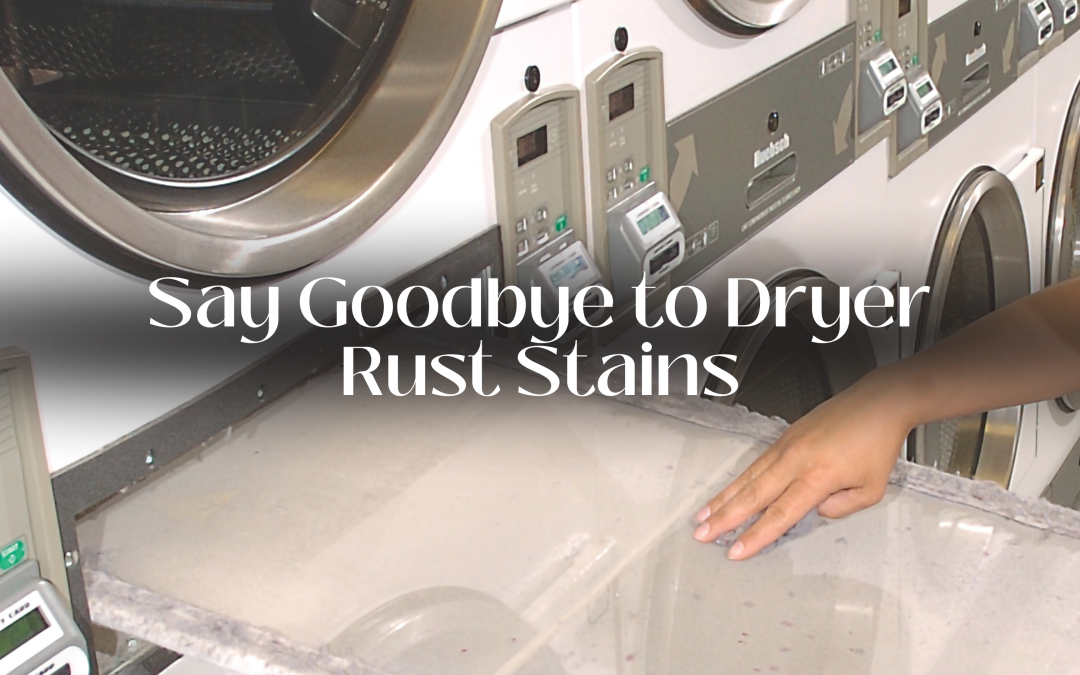
However, if the mark is a light film over the entire comforter, it’s probably rust coming off the front of the dryer. The galvanized plating on most dryer drums has a finite life expectancy of somewhere between 12 to 20 years. Of course, that life span is based on the amount of volume your store has. The more tumbles, the more abrasion and, in turn, the less galvanizing you have.
I suggest you check the dryer to see if the galvanizing is off. If so, at that point, you have one of two choices. You can remove the drum and have it re-plated, or you can buy a new drum. If you are considering purchasing new drums, I would think about stainless steel drums, which never have that problem.
In the meantime, there are some tricks to help you avoid further rust stains. For instance, you can throw towels in every morning and go through a cycle or two to get the rust off. By the way, this type of problem is more prevalent during warm, humid days, especially in coastal areas where the air is salty.
As for your customer’s comforters, if the stains are indeed rust, you can use an iron-removing sour, which you can get from any distributor, to help clear up those marks.
Q2: My husband and I own a laundromat, and the lint screens on some of our stack dryers have developed a residue that we can’t seem to remove. It’s almost like drops of glue on the lint screens. Do you have any suggestions for us?
I would check the heat level on your dryers. Some garments, especially slacks and dresses, have their fabrics glues together in certain areas. And, if you are overheating your dryers, that glue or adhesive can come loose in the dryer and eventually wind up on your lint screens.
Therefore, your dryers should not be set above 180 to 185 degrees.
As far as removing the glue from your lint screens, often naphtha or certain paint removers can be effective at dislodging these adhesives. Of course, glue has many different forms and formulations. Some glue is plastic-based, some is metal-based, and some feature a combination of acrylics. Therefore, it likely will be a process of trial and error to see what may work best to clean off those lint screens.